Study in Bangladesh with our detailed 2026 guide to higher education, top universities, Times Higher Education rankings, admissions, costs, scholarships, and student opportunities.
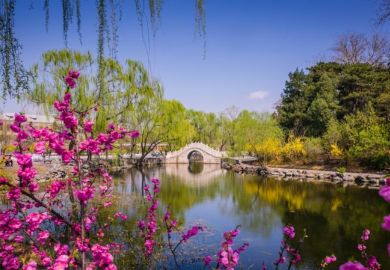
There are many reasons to study in Bangladesh. After independence from Pakistan in 1971, Bangladesh has emerged as an important nation and Bangladeshi culture and art has contributed to the shaping of the culture of South Asia as a whole. Bangladesh itself is inspired by other countries, and India and Nepal have left their mark in the Bangladesh-eatery, art, language and festivals.
Climate is another reason why Bangladesh is renowned, with mild winters, hot tropical summers and a renowned monsoon season. Study in Bangladesh, As far as the students life is concerned, the University of Daka is one of the most renowned university in Bangladesh.
The University of Dhaka was established in 1921 and is the oldest university in Bangladesh with the notable name of the first Study in Bangladesh president, Sheikh Mujibur Rahman and Nobel Peace Prize winner Muhammed Yunus. Over a dozen former presidents, several prime ministers, also attended it.
Best universities in Asia 2026
Discover the best universities in Asia from data gathered in the Times Higher Education Asia University Rankings. The rankings are put together using a robust methdology which Study in Bangladesh, includes student engagement, academic reputation and international exchange opportunities.
Best universities in Malaysia 2026 is a list of the top universities that offer education in Malaysia.
Explore the Times Higher Education Malaysia University Rankings 2026 and find out the top universities in Malaysia.
The following list of Malaysian universities highlights Malaysia’s best universities and colleges, based on the reputed Times Higher Education World University Rankings 2026.
The universities in Malaysia Study in Bangladesh, are evaluated under various categories like teaching, research and international outlook.
It adopts an effective methodology developed by its own data team which is trusted by students, academics, policy makers and industry stakeholders around the world.
Best universities in Tokyo 2022
Analyze the Times Higher Education Japan University Rankings and find the best universities in Tokyo.
Tokyo is a place of contrasts, where tradition meets modernity, the ancient mixes with the contemporary and the past meets the present.
It has evolved from being a traditional cultural centre to a skyscraper city with cutting-edge technology. The same innovation trend is occurring in the higher education sector as well and the country has poured money into ensuring that its universities align themselves in line with the rest of the world.
To become more appealing to international students, universities are making a number of concrete steps, such as constructing on-campus dormitory facilities, teaching courses in English and giving more support to the foreign students.
If you are interested in going to Japan, then have a look at some of the best Universities listed below based on the data collected for the Times Higher Education Japan University Rankings.
- Tokyo Institute of Technology
Tokyo Institute of Technology (Tokyo Tech) is the largest science and technology focused institution of higher learning in Japan.
It has three campus; Ōokayama Station campus, Tamachi campus, and Suzukakedai campus. The main library, the largest science and technology library in Japan, is located at the main campus, Study in Bangladesh, Ōokayama. The library is used by some 1200 students and staff on a daily basis.
There are full degree programmes at all levels offered at Tokyo Tech. The global scientists and engineers programme is a transdisciplinary bachelor of engineering programme, and the international graduate programmes are for those who wish to further their education in science or engineering in Japan.
- The University of Tokyo
The University of Tokyo was founded in 1877 to become the first national university in Japan.
The institution has many notable alumni including 17 prime ministers, Study in Bangladesh, 16 Nobel laureates, three Pritzker Prize laureates, three astronauts and one Fields Medalist.
The university has some programmes taught in full English and are targeted towards international students since 2012.
This university is equipped with five campuses located in the districts of Hongō, Komaba, Kashiwa, Shirokane and Nakano. The main campus in the area of Hongō has excellent examples of traditional Japanese architecture, such as the Akamon (Red Gate) and Yasuda Auditorium.
- International Christian University
International Christian University (ICU) is a non-denominational private university in Mitaka, Tokyo, Japan. It was established in 1949.
It is a liberal arts college, and has several partner institutions around the world, such as the University of California system, Yonsei University, UCL, and many others.
Instructors are to be proficient in both English and Japanese and classes are to be conducted in either English or Japanese. Approximately 30 per cent of the courses are offered in English. The undergraduate school offers 31 majors, such as anthropology, computer science, economics, international relations, linguistics, music, psychology and public policy, to name a few.
- Keio University
Established in 1858, Keio University is considered to be Japan’s oldest private university. It was established by Japanese author and educator Yukichi Fukuzawa.
The university has six main campuses in Tokyo and Kanagawa.
There are a range of degree programmes available to students at the university with 10 undergraduate faculties, 14 graduate schools and 30 research centres on offer.
Study in Bangladesh
Many other high-ranking universities can be found in Tokyo, including Tokyo University of Science.
Study in Bangladesh: A Growing Higher Education Destination
Choosing the right country for higher education is an important decision for students seeking academic quality, career development, affordability, and international exposure. Study in Bangladesh has become an increasingly attractive option for students who want access to a growing higher education sector in South Asia. Bangladesh offers public and private universities, specialized institutions, medical colleges, engineering schools, business programs, and postgraduate research opportunities.
The country’s higher education sector includes a substantial network of universities and tertiary institutions. Government-backed higher education information indicates that Bangladesh’s university sector has expanded considerably, while the University Grants Commission (UGC) plays an important role in overseeing university affairs.
For students researching Study in Bangladesh, the country’s combination of academic variety, comparatively affordable education, cultural diversity, and expanding international connections makes it a destination worth considering. Students can choose programs in engineering, business, computer science, medicine, social sciences, humanities, agriculture, life sciences, law, and many other disciplines.
Studentportalhub.online can also serve as an informative resource for students researching international education opportunities, university admissions, scholarships, and academic destinations.
Study in Bangladesh and Times Higher Education Rankings
When students evaluate universities, international rankings can provide useful information about institutional performance. Times Higher Education (THE) evaluates universities using indicators covering areas such as teaching, research environment, research quality, industry engagement, and international outlook.
The Times Higher Education World University Rankings 2026 evaluated 2,191 institutions across 115 countries and territories. This provides an important international framework for students comparing universities around the world.
Bangladesh is represented in the THE Asia University Rankings 2026, with 19 universities included. The country’s highest-ranked institutions in that edition were Bangladesh University of Engineering and Technology (BUET) and the University of Dhaka, both placed in the 301–350 range.
This international visibility demonstrates the increasing presence of Bangladeshi universities in global higher education comparisons. Therefore, students interested in Study in Bangladesh can use THE rankings as one source of information while also considering accreditation, programs, faculty, research facilities, tuition costs, location, and career outcomes.
Top Universities to Consider for Study in Bangladesh
Bangladesh has several established universities offering programs across a wide range of academic disciplines. Students should select an institution according to their chosen subject rather than relying exclusively on an overall ranking.
Bangladesh University of Engineering and Technology
BUET is particularly important for students interested in engineering, architecture, technology, and related disciplines. Its presence among Bangladesh’s leading institutions in the THE Asia University Rankings makes it an important choice for students researching technical education.
University of Dhaka
The University of Dhaka is one of Bangladesh’s most prominent universities and offers extensive academic opportunities across humanities, sciences, business, social sciences, law, and other fields. It was also placed in the 301–350 band in the THE Asia University Rankings 2026.
BRAC University
BRAC University is a private university in Dhaka established in 2001. It offers undergraduate and postgraduate education and has developed a strong emphasis on knowledge creation, human values, and sustainable development. THE places BRAC University in the 1001–1200 range of the World University Rankings 2026.
University of Chittagong
The University of Chittagong provides multidisciplinary education through faculties including arts and humanities, science, business administration, social sciences, law, biological sciences, engineering, education, marine sciences and fisheries, and medicine. THE places it in the 1201–1500 range in the World University Rankings 2026.
East West University
East West University is another private institution in Dhaka offering undergraduate, graduate, and doctoral programs. Its academic areas include business and economics, science and engineering, and liberal arts and social sciences.
Study in Bangladesh: Popular Courses and Subjects
One of the strongest advantages of Study in Bangladesh is the variety of academic disciplines available. Students can investigate programs according to their educational background and career objectives.
Popular fields include:
Engineering and Technology
Computer Science and Information Technology
Business Administration
Economics and Finance
Medicine and Dentistry
Public Health
Agriculture
Biological and Life Sciences
Natural Sciences
Law
Humanities
Social Sciences
Architecture
Environmental Science
Education
Media and Communication
Undergraduate programs commonly take several years to complete, with many bachelor’s programs structured around approximately four years of study. Bangladesh’s international education portal also highlights opportunities across agriculture, arts, business, engineering, technology, law, humanities, social sciences, biological sciences, and natural sciences.
Admission Requirements for Study in Bangladesh
Admission requirements vary according to the university, program, academic level, and nationality of the applicant. Students should always verify the latest requirements directly with their selected institution before submitting an application.
International applicants generally need appropriate academic qualifications and supporting documents. Depending on the university and program, applicants may be asked to provide:
Academic certificates and transcripts
Passport or identification documents
Passport-size photographs
Proof of English proficiency where applicable
Application forms
Recommendation letters for certain postgraduate programs
Statement of purpose for selected programs
Research proposal for some doctoral applications
Additional documents required by the university
For example, BRAC University states that international undergraduate applicants must submit relevant academic documents for evaluation by its International Office.
Students researching Study in Bangladesh should therefore avoid assuming that one admission policy applies to every institution.
Study in Bangladesh: Tuition and Living Costs
Affordability is one of the factors that can make Study in Bangladesh attractive to international students. Costs vary significantly depending on the university, degree, discipline, accommodation, lifestyle, and location.
Public universities may have different fee structures from private universities, while professional programs such as medicine and specialized technical courses can have different financial requirements.
Living expenses may include:
Accommodation
Food
Transportation
Books and academic materials
Internet and communication
Personal expenses
Health-related expenses
Recreation
Dhaka generally provides a wider range of accommodation and transportation choices, although students should prepare a realistic monthly budget before arrival.
A responsible financial plan should include both tuition and living expenses rather than focusing exclusively on the published academic fee.
Scholarships and Financial Support
Students interested in Study in Bangladesh should investigate scholarships, tuition waivers, institutional financial assistance, and other funding opportunities before applying.
Scholarship availability differs between universities and programs. Some institutions may offer merit-based tuition reductions, while others may provide financial assistance according to specific eligibility criteria.
Students should check:
University scholarship pages.
International student offices.
Government scholarship announcements.
Program-specific funding.
Research funding for postgraduate study.
Tuition-waiver opportunities.
Application deadlines and eligibility conditions.
Because scholarship rules can change from one admission cycle to another, students should verify the latest information directly with the relevant university.
Study in Bangladesh for International Students
Bangladesh is becoming more connected to international higher education. The country’s institutions increasingly participate in international partnerships, academic exchanges, research collaboration, and cross-border education initiatives.
A British Council review of transnational education in Bangladesh noted that internationalization has developed through areas including international curricula, overseas student mobility, and collaborative ventures between higher education institutions.
For international students, this creates opportunities to experience a new academic environment while remaining within South Asia. Students from neighboring Asian countries, the Middle East, and other regions can explore Bangladesh’s universities according to their academic interests.
The country’s official Study in Bangladesh portal also provides international applicants with information about universities, medical colleges, admission pathways, scholarships, entry requirements, and student support.
Student Life While You Study in Bangladesh
Academic life is only one part of the international student experience. Students who Study in Bangladesh can experience a country with a distinctive cultural identity, traditional festivals, diverse cuisine, historical locations, and vibrant urban communities.
Dhaka offers a large metropolitan environment with universities, libraries, restaurants, shopping centers, cultural institutions, and professional opportunities. Other university cities can provide different lifestyles and environments.
International students should also take time to understand local customs, transportation, food, climate, accommodation arrangements, and university regulations before arriving.
Developing relationships with classmates and participating in academic clubs, student organizations, seminars, competitions, and cultural activities can make the university experience more rewarding.
Research Opportunities in Bangladesh
Research is an increasingly important part of higher education in Bangladesh. Students pursuing master’s and doctoral degrees should examine the research strengths of individual universities and departments rather than relying only on an institution’s overall reputation.
Potential research areas include:
Climate change
Environmental science
Agriculture
Public health
Engineering
Artificial intelligence
Computer science
Economics
Development studies
Renewable energy
Biotechnology
Social sciences
THE’s ranking methodology includes research-related indicators, making research performance an important part of international university comparisons.
For postgraduate students, evaluating faculty expertise, laboratories, research publications, funding, and supervisor availability can be particularly important.
How to Choose the Right University to Study in Bangladesh
Choosing a university should involve more than looking at a single ranking position. We recommend comparing several factors before making a final decision.
Academic reputation should be considered alongside the quality of the specific department offering the chosen course.
Accreditation and recognition are essential, particularly for regulated professions such as medicine, engineering, law, and education.
Program curriculum should match the student’s academic and professional objectives.
Research opportunities matter greatly for students planning master’s, MPhil, or PhD study.
Tuition and living costs should fit within the student’s overall financial plan.
Location affects transportation, accommodation, lifestyle, and access to professional opportunities.
International student support can also make a significant difference, particularly for students traveling abroad for the first time.
Study in Bangladesh: Application Process
The application process can differ between universities, but students can generally follow a structured sequence:
- Select a Field of Study
Begin by identifying the preferred academic subject and degree level.
- Research Universities
Compare universities according to academic reputation, program availability, recognition, costs, location, facilities, and student support.
- Check Eligibility
Review the university’s latest admission requirements and confirm that previous qualifications meet the criteria.
- Prepare Documents
Collect academic certificates, transcripts, identification documents, photographs, language-test results, and other required materials.
- Submit the Application
Complete the appropriate online or institutional application process before the stated deadline.
- Wait for the Admission Decision
The university may review academic documents and request additional information before issuing an admission decision.
- Arrange Student Visa and Travel Documents
International students should follow the current requirements of Bangladeshi authorities and the relevant diplomatic mission.
- Prepare for Arrival
Arrange accommodation, transportation, finances, health preparations, and university registration before traveling.
Why Study in Bangladesh in 2026?
The Study in Bangladesh opportunity in 2026 reflects a higher education environment that is becoming more visible internationally. The inclusion of 19 Bangladeshi universities in the THE Asia University Rankings 2026 demonstrates the country’s growing representation in international university comparisons.
Bangladesh can appeal to students seeking a combination of academic diversity, regional exposure, affordability, and developing research opportunities. Students can choose between public and private institutions and explore subjects ranging from engineering and computer science to business, medicine, humanities, and social sciences.
At the same time, prospective students should conduct careful research. A university’s ranking should be only one part of the decision-making process. Program quality, recognition, faculty, costs, admission requirements, facilities, and career objectives should all be evaluated.
Final Thoughts on Study in Bangladesh
Study in Bangladesh offers students an opportunity to pursue higher education within one of South Asia’s rapidly developing academic environments. With a broad university sector, diverse academic programs, international partnerships, and growing representation in global rankings, Bangladesh deserves consideration from students looking for an alternative international study destination.
The Times Higher Education rankings provide a useful starting point for comparing institutions, while university-specific information provides the detail needed for an informed decision. In 2026, institutions such as BUET, the University of Dhaka, BRAC University, the University of Chittagong, and other Bangladeshi universities demonstrate the diversity of options available to prospective students.
For students beginning their research, Studentportalhub.online can provide additional educational information and guidance while they compare universities, courses, admissions, scholarships, and international study opportunities. A careful combination of academic research, financial planning, university comparison, and official admission information can help students make a confident and informed choice to Study in Bangladesh in 2026.