Faculty of Medicine – University of Jaffna offers excellent medical education, clinical training, research opportunities, and a promising future for aspiring doctors in Sri Lanka. Explore admissions, courses, facilities, and career prospects for 2026.
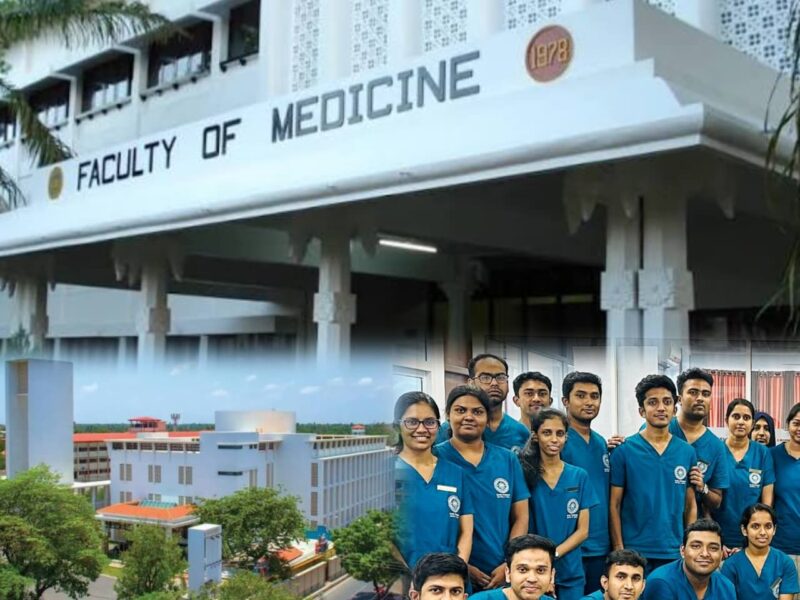
Faculty of Medicine – University of Jaffna
Start your medical career in English from our five-year MBBS programme with solid scientific base and large clinical exposure with us.
Elective Placement Programme for Overseas Medical Students (OMS)
Students from other State and International Universities are invited to come for elective programme in our departments on the approval of the Dean, faculty of Medicine and the coordinator for elective appointments.
Introduction
Faculty of Medicine, University of Jaffna is one of the accredited medical schools in Srilanka, established in 1978 at kaithady, Jaffna then moved to the current location at Adiyapatham Road, Tirunelveli, Jaffna. The Teaching hospital Jaffna provides the clinical teaching facilities by the faculty academics and extended faculty speciality consultants.
This faculty’s prime aim is to impart undergraduate medical education at a level accepted internationally. A Medical Degree (B.M.B.S.) is awarded to our graduates from Faculty of Medicine, University of Jaffna after completion of their medical studies. The faculty is also actively involved in the training of students of various post-graduate medical programmes.

The faculty of Medicine, University of Jaffna has introduced the Electives program for the undergraduate students in its curriculum in 2009. It is meant to be for our students to have a wider range of exposure and experience in their interested medical speciality at local, national or international institution. It has been expanded to international medical and allied health science undergraduates. Undergraduate students are welcome to experience the Srilankan prospective of health in a setting of academic excellence and international goodwill.
Benefits
Medical elective is a brief elective that is offered to undergraduate students in the medical and allied health sciences. This enables the international students have wider range of exposure and experience of medical education in a developing tropical country. This gives an opportunity to work with different population, experience diversity of diseases and the infra structure of health care system in Srilanka. In addition, they get the benefit of learning clinical skills, examination techniques and detecting clinical signs, developing humanities, life style and professionalism in a diverse community.
Eligibility
Elective programme is available to the students at the Faculty of Medicine, University of Jaffna for elective placement to students who are enrolled in an overseas university or medical school for a medical or allied health science programme.
We should assume that an elective student has a rudimentary understanding and some experience with the discipline in which he/she is seeking to pursue an elective.
Medical students may select electives from clinical departments, if the students have completed their 3rd year or above.
Pre and pare clinical departments provide electives for all students who are eligible to take electives.
Availabilities
Most of the clinical departments are functioned at Teaching hospital, Jaffna. Elective placement will be provided by the faculty at other University departments.
Clinical departments:

Medicine
Surgery
Paediatrics
Gynaecology & Obstetrics
Psychiatry
Practical departments: Pre and Para clinical
Anatomy
Community and Family Medicine
Speciality departments (under Teaching hospital, Jaffna)
Cardiology
Cardiothoracic surgery
Neurology
Neurosurgery
Chest Medicine
Genitourinary
Rheumatology
ENT
Nephrology
Plastic surgery
Gastroenterology
Anaesthesia
Ophthalmology
Outreached treatment centres
Specialities of the clinical elective placement: Most of the clinical elective placement are done in Teaching hospital, Jaffna except the following specialities.
Department of Psychiatry: at Psychiatry unit, Tellipallai (13 km away from Jaffna city)
Oncology department: at TRIAL Cancer hospital, Tellipallai (13 km away from Jaffna city)
Rajive Gandhi hospital: Jaffna Rajive Gandhi hospital ( 1km away from Jaffna city)
Please note: Elective students will need to make their own travel arrangements for appointments to these relevant centres.
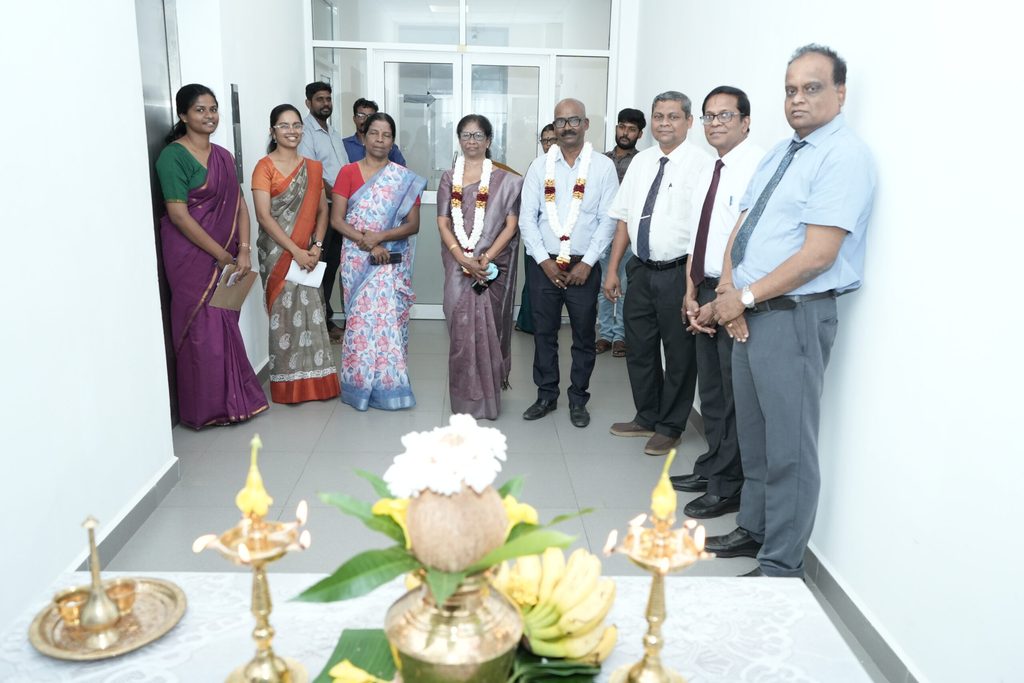
Community Medicine and Family Medicine are affiliated to the corresponding departments in Faculty of Medicine, University of Jaffna as well as community out-reached centres according to their set schedule.
All applications are accepted online.
Please visit our website and refer to Elective appointment page and click the ‘’apply’’ button.
Fill in the application form online
Sent all necessary forms with the application
A letter of request for elective placement with preferred speciality/specialities with duration (with tentative dates)
Passport photo sized photo of the applicant.A photograph of the applicant that is professionally taken.
A letter confirming your studentship from your medical school/ University attached
Incomplete applications will be rejected upon receipt or when processing is made.
If the application is successfully submitted, an e-mail of the same will be sent to you.
Processing of Application
The processing of application will be done within 2-3 months.
Once the processing completed, the decision of acceptance/rejection of your elective placement will be notified
Note: It will be decided based on the availability of the department, elective speciality and duration, examination dates and out of bounds from the hospital.
Email will be sent to you when accepted, providing payment information.
Once the payment made, you will receive a payment conformation letter
You will be followed up to process your visa with an elective confirmation letter in 2- 4 weeks.
Fees
A fee of US $ 75 per week should be paid for all the elective appointments
The above fee is in addition to an administration fee of US 20, regardless of length of elective placement.
This should be paid online to the financial department, University of Jaffna with the reference number:
This fee does not include your expenses of immigration and emigration or visa process
Fund allocation of Elective placement at Faculty of Medicine, University of Jaffna
Students opting for following specialities will be accommodated in the academic units of the university in Teaching hospital, Jaffna.
General Medicine
General surgery
Paediatrics
Gynaecology & Obstetrics
Psychiatry
Community & Family Medicine
Students who request to do other specialities (other than mentioned above) will be
On arrival
Please provide us with the date you have confirmed you will arrive, before you start.
It is important to inform in case of any change in your situation (eg arrival time)
True copies of payment slip, and submitted documents (Elective request letter, Dean’s letter and photograph) are expected to be brought with you.
It is expected that you will be met by the elective coordinator on arrival. Location will be informed to you
Refund
Kindly let us know as soon as possible if you have decided not to attend the elective
Notifying in advance of your appointment by at least 2 weeks before the appointment will be scheduled will result in the refund of any paid elective fee.
The refund process could take up 3-4 months
No refund will be provided if you notify the school less than 2 weeks before the elective date or after the elective has started.
Attendance
Relevant departments will issue to students a document that outlines the schedule during the appointment, detail of the consultant/s that students will be attached/supervised to, etc.
At the clinical appointments, students will also be oriented to the wards. The department Head(s) or supervisor will give students documents such as the ward schedule, information about the appointment (what to expect, learning opportunities, etc.).
You should notify your absence to your supervising consultant/head of department during the period of placement.
Accommodation and food
It is your responsibility to book your own hotel and/or transport. There are housing facilities (guest house, motels/hotels) conveniently located near the university and hospital.
In the University canteen as well as in restaurants around the hospitals, food is available.
History
The Faculty of Medicine was established in the University of Jaffna on 7th of August 1978. The Honourable Mr. Nissanka Wijeyeratne, Minister of Education and Higher Education opened it ceremoniously on 8th October 1978. Provincial Hospital Jaffna was declared as the teaching hospital of the faculty of medicine in the same time.
Initially the Pre-clinical course was held in the premises of the Ayurvedic Teaching Hospital and now the Unit of Siddha Medicine of the University of Jaffna, Kaithady. Late Prof. S. Vithiananthan, first Vice Chancellor of the University of Jaffna, laid the foundation stone of the Faculty of Medicine at Thirunelvely on 29th November, 1979.
The first batch were admitted on 8th August, 1979 and passed out the Final MBBS Examination in July, 1983. The U.G.C is responsible for the admission of students. The Faculty has produced 2500 doctors up to November 2018.
Prof. A. A. Hoover, Professor of Biochemistry was the founder Dean of the Faculty of Medicine. The Faculty was fortunate to have Prof. A. A. Hoover for forty years at the University, as a teacher and a friend. Prof. R. Kanagasuntheram, an internationally renowned Professor of Anatomy was the second Dean of the Faculty. He was responsible for getting endowment for Chairs in Orthopaedic Surgery and Oncology.
Prof. C. Sivagnanasundram, a Professor of Community Medicine, WHO Consultant, Novelist and social worker was the third Dean. He implemented some innovative teaching programs in his subject. Prof. K. Balasubramaniam, Professor of Biochemistry took over the reins as the fourth Dean. He introduced Biotechnology to the faculty and the Link with the Swedish University.
Prof. S.V. Parameswaran, a founder Member of the Faculty and Professor of Physiology served as the Dean during the worst crisis due to displacement of the Faculty from July 1994 to July 1997. Then Dr. R. Rajendraprasad, Head Department of Anatomy assumed the Deanship and went ahead with the academic activities with various constraints.
Prof (Ms) V. Arasaratnam, Professor of Biochemistry took over the Deanship and worked tirelessly to rebuild the Faculty and successfully clear the UGC policy backlog and the internal backlog with the active participation of all the staff of the Faculty as well as the Consultants of Jaffna, Batticaloa and Vavuniya Hospitals. Associate Professor Prof. K. Sivapalan. Physiology was successful and became the eighth Dean, who served in the Office of the Dean from August 2003 to September 2012.
He continued to serve as Dean for nine years and it was a record as his Deanship period was three terms. In his time, the curriculum has been changed and put into practice effectively. Dr. S. Balakumar, Senior Lecturer & Head of the Department (Biochemistry) took over as the ninth Dean from September, 2012. During his tenure , the Hoover Auditorium was ceremonially opened by the Hon.
On 14th June 2014, S.B. Dissanayake, Minister of Higher Education opened the College and on 09th April 2014 the Examination Hall was opened by Dr. Sunil Jeyantha Navaratne, Secretary, Ministry of Higher Education. He has done his utmost to acquire land to erect a 5-storey building for the clinical departments.
A Prof. Dr.S.Raviraj, Dean of Faculty of Medicine, University of Jaffna was elected as a Dean for the period 14.09.2015 to 13.09.2018.
In what ways do they differ?What is the difference between them?
Admission
The University Grants Commission of Sri Lanka, selects students to all medical schools in the island based on the performance in the G.C.E (A/L) examination conducted by the Department of Examination, Sri Lanka for admission to Undergraduate Course.
The intake at Jaffna Medical Faculty is 100 students a year.
Degrees Awarded
A Bachelor of Medicine and Bachelor of Surgery [MBBS] (Jaffna) is awarded to students who pass the Medical Curriculum successfully and a Bachelor of Medical Sciences [BMSc] is awarded to students who choose to drop out after the Second Examination for Medical Degrees.
The Curriculum must be compulsory.
The curriculum is guided by the Subject Benchmark Statement in Medicine, published by the CVCD in October 2004 and the Prescribed Standards for Undergraduate Medical Education of the Sri Lanka Medical Council.
Medium of instruction
All course work is in English.
Course Duration
The total duration of the course is 5 years + 1 year Internship. Academic year is divided into three terms (each 10-13 weeks). The end of each term will be based on completion of term teaching / learning activities.
Teaching & Evaluation
Lectures and Practical classes are held in the Faculty. The Final year students are given lectures in the teaching hospital clinical lecture room. The clinical course is held at the Teaching Hospital, Jaffna with approximately 95% of the time.
Paul Hospital, Thellippalai – 16 km away from the Faculty, and Chest Clinic, Jaffna are the regular teaching hospitals for Psychiatry and Chest Diseases respectively. The Community Medicine Project area of Kokuvil and Kondavil have the following preventive aspects taught: The students are encouraged to expand to broader communities for community programs.
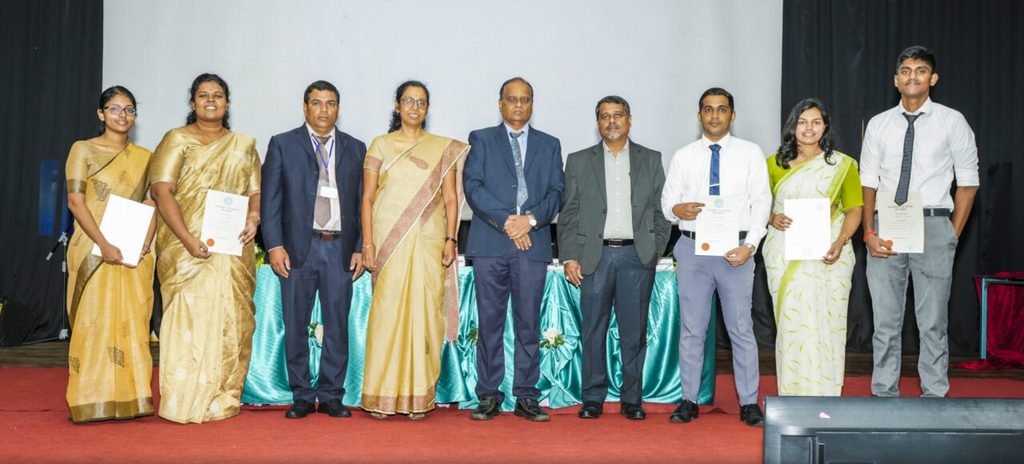
The number of times the test has been taken
Each student is allowed a maximum period of 10 years for the course. A maximum of 6 attempts is allowed at the examination for Medical Degree and 4 attempts for all other Degree and Diploma examinations.
Fees
The following fee is applicable for Sri Lankan students on the Medical course.
New admission and Registration is provided.
Registration fee 250.00
Medical fee 250.00
Laboratory deposit 500.00
Student Charter 100.00
Student Identity card 250.00
Orientation fee 250.00
Library deposit 500.00
Record Book is available for FREE.
If record book is lost, make a duplicate copy 1000.00
Renewal of Registration
Registration fee 150.00
Medical fee 250.00
Other Fees
Convocation degree certificate 500.00
Convocation cloak fee 500.00
Convocation supplication fee 500.00
Convocation casuals (if lost/damaged) 3500.00
Cloak delay for Convocation 500.00 per day
Convocation garland – if lost/damaged 1000.00
Statement of results fee 100.00
Duplicate results sheet 500.00
Transcript 500.00 + postage
Transcript – online processing 500.00
Boys’ hostel fee: 200.00/month, Girls’ hostel fee: 200.00/month
Hostel deposit/admission fee 250.00
Examination Fee
The first exam for medical degrees is now a thing of the past.
Complete examination Rs. 1000.00
Single subject Rs. 250.00
The second exam for medical degrees part 1.
Complete examination Rs. 750.00
Single subject Rs. 250.00
Second Examination for Medical Degrees (Part II)
Complete examination Rs. 750.00
Single subject Rs. 250.00
Medical Degree Final Exam
Complete examination Rs. 1000.00
Single subject Rs. 250.00
Course Fee (Repeat students)
Course fee per subject per year Rs. 200.00
- History and Development of the Faculty of Medicine
The Faculty of Medicine at the University of Jaffna was established in 1978 to expand access to medical education and develop qualified healthcare professionals. Its establishment represented an important development for higher education in northern Sri Lanka, where the need for trained medical practitioners and accessible healthcare services was significant.
Over the years, the Faculty has expanded its academic activities, teaching capacity, clinical training, and research interests. Its development has been closely connected with the changing healthcare needs of the Northern Province and Sri Lanka as a whole.
The Faculty’s educational approach focuses on building a strong foundation in medical sciences while helping students understand the social, cultural, and environmental factors that influence health. This combination of academic and practical learning is essential for preparing future doctors to work in diverse clinical settings.
Today, the Faculty of Medicine, University of Jaffna, continues to contribute to medical education, healthcare development, and research through its academic programmes and professional activities.
- Academic Programmes at the Faculty of Medicine
The Faculty of Medicine primarily focuses on undergraduate medical education, with its main programme leading to the Bachelor of Medicine and Bachelor of Surgery (MBBS) degree.
The medical curriculum is designed to help students progress from foundational scientific knowledge to clinical understanding and supervised patient care. Students develop an understanding of the human body, diseases, diagnosis, treatment principles, and professional medical practice.
Major Areas of Medical Education
The academic programme covers a range of important subjects and learning areas, including:
Anatomy: Understanding the structure of the human body and its systems.
Physiology: Studying how the human body and its organs function.
Biochemistry: Exploring the chemical processes essential to human life and health.
Pathology: Learning about diseases, their causes, and their effects on the body.
Pharmacology: Understanding medicines, their effects, and their appropriate clinical use.
Microbiology: Studying microorganisms, infectious diseases, and laboratory principles.
Community Medicine: Examining public health, disease prevention, epidemiology, and healthcare delivery.
Clinical Medicine: Developing the knowledge and skills needed to assess and manage patients.
Surgery: Learning the principles of surgical care, clinical assessment, and patient management.
Obstetrics and Gynaecology: Studying reproductive health, pregnancy, childbirth, and related medical conditions.
Paediatrics: Understanding the healthcare needs of infants, children, and adolescents.
The precise course structure and sequence are determined by the University’s approved curriculum. Through these areas of study, the Faculty of Medicine aims to establish a comprehensive understanding of medical science and clinical practice.
- Faculty of Medicine Admissions 2026
Admission to the Faculty of Medicine, University of Jaffna, is an important opportunity for students who aspire to pursue a professional career in healthcare. Entry to undergraduate medical programmes in Sri Lanka is competitive and is generally governed by the national university admission process.
Students seeking admission should carefully review the applicable requirements, selection procedures, and application instructions for the relevant academic year.
General Admission Requirements
Prospective medical students generally need to meet the following requirements:
Completion of the required secondary education.
Appropriate results in the relevant GCE Advanced Level examinations.
Meeting the subject requirements established for medical degree admission.
Satisfying the applicable university admission criteria.
Meeting any additional conditions specified by the relevant authorities.
Admission to state university medical faculties in Sri Lanka is generally coordinated through the University Grants Commission (UGC), based on the applicable selection policies and examination results.
Applicants should consult the latest official UGC admissions handbook and University of Jaffna announcements for confirmed eligibility criteria, selection procedures, and application deadlines for 2026. Admission requirements should not be assumed to remain identical from one year to another.
At studentportalhub.online, prospective students can explore general educational guidance about medical admissions and learn what information to check before submitting an application.
- Curriculum and Learning Environment
The Faculty of Medicine at the University of Jaffna provides a structured academic environment that combines scientific foundations with clinical education. Medical students need to develop more than textbook knowledge; they must also learn to assess patients, communicate effectively, interpret clinical information, and make responsible decisions.
The medical curriculum progresses through different stages of learning, allowing students to build their knowledge systematically.
Preclinical Education
The early stages of medical education focus on foundational subjects such as anatomy, physiology, and biochemistry. These disciplines help students understand normal human structure and function, creating the basis for learning about disease and clinical management.
Lectures, practical sessions, laboratory activities, group discussions, and independent study may form part of the learning experience.
Clinical Education
As students progress through the programme, they gain exposure to clinical disciplines and patient-centred learning. Clinical education enables them to connect scientific principles with real healthcare situations.
Under appropriate supervision, students learn how to take patient histories, conduct physical examinations, understand diagnostic investigations, and develop clinical reasoning skills.
Professional Development
Medical education also requires students to develop communication, teamwork, ethical awareness, empathy, and accountability. These professional competencies help future doctors build trust with patients and work effectively with other healthcare professionals.
- Clinical Training and Hospital Facilities
Clinical training is an essential part of medical education at the Faculty of Medicine – University of Jaffna. It gives students the opportunity to understand how medical knowledge is applied in hospitals and other healthcare environments.
The Faculty has clinical teaching connections with hospitals in Jaffna, including Teaching Hospital Jaffna, which serves as a major healthcare institution in the region.
Clinical exposure helps students understand a wide range of medical conditions, patient needs, diagnostic processes, and treatment approaches. Students can observe healthcare professionals, participate in supervised learning activities, and gradually develop the competencies required for medical practice.
Benefits of Clinical Training
Exposure to real clinical environments.
Opportunities to observe patient assessment and management.
Development of clinical communication skills.
Understanding of medical ethics and patient confidentiality.
Experience working with multidisciplinary healthcare teams.
Practical understanding of common and complex health conditions.
Clinical training also introduces students to the healthcare challenges faced by communities in northern Sri Lanka. This experience can help them develop a stronger appreciation of the importance of accessible, ethical, and patient-centred healthcare.
- Research and Innovation at the Faculty of Medicine
Medical research plays an important role in improving healthcare, supporting evidence-based clinical practice, and addressing emerging health challenges. The Faculty of Medicine, University of Jaffna, contributes to the academic research environment through medical scholarship, investigation, and scientific learning.
Research activities in medical education may cover areas such as public health, infectious diseases, non-communicable diseases, community healthcare, clinical medicine, and other subjects relevant to the region.
Importance of Medical Research
Research encourages students and academic professionals to question existing knowledge, evaluate scientific evidence, and identify opportunities to improve healthcare delivery.
Medical research can contribute to:
Better understanding of disease patterns.
Improvements in disease prevention and health promotion.
Evidence-based treatment and patient management.
Stronger public health strategies.
Improved healthcare planning.
Development of scientific and analytical skills.
By participating in academic projects and research-oriented learning, medical students can develop critical thinking, scientific literacy, and a deeper understanding of evidence-based medicine.
Students interested in research should consult the Faculty’s official academic information to identify current projects, supervisors, and available opportunities.
- Campus Facilities and Student Support
A supportive learning environment is essential for medical students, whose programmes require sustained academic commitment, practical training, and personal development.
The University of Jaffna provides a broader university environment in which students can engage in academic activities, student societies, sports, and cultural events. Facilities and services available to individual students may vary according to the campus, programme, and current university arrangements.
Academic Learning Resources
Medical students require access to appropriate learning materials, academic guidance, laboratories, and clinical learning environments. These resources support independent study and practical understanding throughout the medical programme.
Library and Study Facilities
Library services and other academic resources help students access textbooks, reference materials, journals, and scientific information. Independent study is particularly important in medicine because students must continually expand their knowledge.
Student Activities
Participation in extracurricular activities can help medical students improve communication, teamwork, leadership, and time-management skills. University societies and student-led initiatives can also provide opportunities for social engagement and community involvement.
Prospective applicants should consult the University of Jaffna for the latest details about available accommodation, student welfare services, library access, and campus facilities.
- Why Choose the Faculty of Medicine – University of Jaffna?
Choosing a medical school is an important decision that can influence a student’s academic development and professional future. The Faculty of Medicine at the University of Jaffna offers several educational benefits for students seeking medical training in Sri Lanka.
Strong Academic Foundation
The MBBS programme provides a structured education in medical sciences and clinical disciplines. Students progressively develop the scientific knowledge necessary to understand human health and disease.
Regional Healthcare Exposure
Studying in Jaffna offers opportunities to understand the healthcare needs and challenges of communities in northern Sri Lanka. Regional clinical exposure can help students appreciate the importance of culturally appropriate and accessible medical services.
Practical Clinical Learning
Clinical teaching provides opportunities to connect classroom knowledge with patient care. Supervised exposure to healthcare settings is essential for developing the professional skills required of future doctors.
Research and Critical Thinking
Medical education encourages scientific curiosity, analytical thinking, and the evaluation of evidence. These abilities are valuable for students who wish to pursue clinical practice, academic medicine, or research.
Professional and Personal Growth
Medical students develop communication, leadership, teamwork, and ethical decision-making skills. These qualities are essential for providing responsible healthcare and working effectively in demanding professional environments.
- Career Opportunities After Graduation
Graduating from the Faculty of Medicine, University of Jaffna, can open pathways to a wide range of healthcare and medical career opportunities, subject to applicable registration, internship, and professional requirements.
The MBBS degree provides the academic foundation for graduates to pursue medical practice and further professional training.
Potential Career Pathways
Medical Officer: Providing medical care within eligible healthcare institutions after fulfilling applicable requirements.
Hospital-Based Doctor: Working in clinical environments and supporting patient diagnosis and management.
General Medical Practice: Pursuing appropriate postgraduate and professional pathways towards general practice.
Medical Specialisation: Applying for postgraduate training in fields such as medicine, surgery, paediatrics, or obstetrics and gynaecology.
Public Health: Exploring further education and career opportunities in disease prevention and population health.
Medical Research: Participating in clinical, biomedical, or public health research.
Medical Education: Pursuing academic and teaching careers after meeting the relevant qualifications and experience requirements.
Graduates must meet the registration and training requirements established by the relevant Sri Lankan medical authorities before undertaking professional medical practice.
- Student Life at the University of Jaffna
Student life at the University of Jaffna extends beyond lectures, laboratories, and clinical training. University students have opportunities to engage in academic communities, cultural activities, sports, and social initiatives.
For medical students, maintaining a balanced routine can be particularly important because medical education involves intensive study and demanding clinical responsibilities.
Participation in student societies, peer-learning groups, and community activities can support personal growth and help students develop interpersonal skills.
Jaffna’s distinctive cultural environment also provides students with opportunities to learn about the region’s traditions, community life, and social context. Such experiences can contribute to a broader understanding of the communities that future healthcare professionals may serve.
- How to Find Official Admissions Information for 2026
Students interested in the Faculty of Medicine should use official sources when checking admission requirements, application procedures, and academic updates.
The following resources are useful starting points:
University of Jaffna: Official University Website
for institutional information and university announcements.
University Grants Commission of Sri Lanka: Official UGC Website
for national university admission information, selection policies, and relevant handbooks.
studentportalhub.online: For additional educational articles and general guidance about universities, academic programmes, and admissions.
Applicants should verify the latest official announcements before making decisions, particularly regarding eligibility, application deadlines, selection criteria, and registration procedures.
- Important Tips for Prospective Medical Students
Students planning to apply to the Faculty of Medicine, University of Jaffna, can benefit from preparing early and understanding the demands of medical education.
Focus on academic performance: Develop a consistent study routine and aim for strong results in the required Advanced Level subjects.
Understand admission policies: Read the latest UGC admission handbook and confirm the requirements for medical degree selection.
Develop communication skills: Effective communication is an essential part of patient care and professional teamwork.
Build study habits: Practise time management, independent learning, and critical thinking.
Explore medical careers: Learn about the responsibilities of doctors and the different pathways available after graduation.
Follow official announcements: Regularly check University of Jaffna and UGC updates for verified admissions information.
Prepare for professional responsibility: Develop empathy, ethical awareness, discipline, and respect for patients and communities.
These steps can help prospective applicants make informed decisions and prepare for the academic and professional challenges associated with a medical degree.
Frequently Asked Questions (FAQs)
- Where is the Faculty of Medicine at the University of Jaffna located?
The Faculty of Medicine is part of the University of Jaffna in Jaffna, Northern Province, Sri Lanka.
- What degree is offered by the Faculty of Medicine?
The Faculty primarily offers the Bachelor of Medicine and Bachelor of Surgery (MBBS) undergraduate medical degree.
- How can students apply to the Faculty of Medicine in 2026?
Eligible students generally apply through the national university admission process administered by the University Grants Commission of Sri Lanka. Applicants should consult the latest official admission handbook for current requirements and procedures.
- Is clinical training included in the medical programme?
Yes. Clinical education is an essential component of the medical programme, helping students develop practical knowledge, clinical reasoning, and patient-care skills through supervised learning.
- What career opportunities are available after completing the MBBS degree?
Graduates may pursue eligible medical practice, internship and registration requirements, postgraduate training, research, public health, and academic career pathways.
- Does the Faculty of Medicine support medical research?
The Faculty contributes to medical research and academic scholarship. Students interested in research should contact the Faculty or consult official university information for current opportunities.
- Where can students find reliable information about admissions?
The University of Jaffna and the University Grants Commission of Sri Lanka are the primary official sources for confirmed admission information. Students can also explore general educational resources at studentportalhub.online.
Conclusion
The Faculty of Medicine – University of Jaffna is an important institution for medical education and healthcare development in Sri Lanka. Since its establishment in 1978, it has contributed to educating future medical professionals through undergraduate teaching, clinical learning, research, and academic activities.
With its MBBS programme, clinical teaching environment, and connection to the healthcare needs of northern Sri Lanka, the Faculty offers aspiring doctors an opportunity to build the knowledge, skills, and professional values needed for a career in medicine.
Students considering admission in 2026 should carefully review the latest eligibility requirements, national selection procedures, and official university announcements. Through informed preparation and a commitment to academic excellence, prospective medical students can take meaningful steps towards a rewarding future in healthcare.
For more educational information, admission guidance, and university-related articles, visit studentportalhub.online.