The University of Kelaniya is a leading public university in Sri Lanka, offering diverse undergraduate, postgraduate, research, and professional study opportunities.
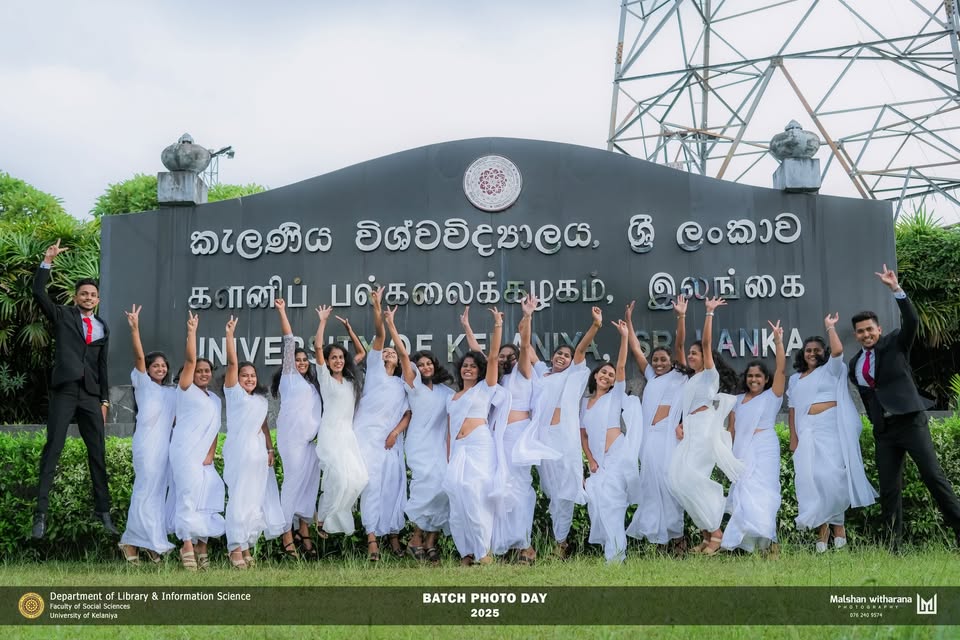
The University of Kelaniya – Overview
The University of Kelaniya is a prominent public university in Sri Lanka with a distinguished history, broad academic portfolio, and strong contribution to higher education, research, and national development.
Located in Kelaniya, close to Colombo, the university has developed from a historic centre of traditional learning into a comprehensive modern institution serving students across numerous academic disciplines. Its origins can be traced to the Vidyalankara Pirivena, established in 1875.
Today, The University of Kelaniya provides opportunities across humanities, social sciences, science, medicine, commerce and management, computing and technology, and postgraduate studies. Official university information identifies seven faculties and a wide range of academic departments and programmes.
For students researching university admissions, degree programmes, academic qualifications, and higher-education opportunities in Sri Lanka, The University of Kelaniya remains an important institution to consider. At studentportalhub.online, students can also use university-related information as a starting point for comparing courses, admissions opportunities, and academic pathways.
History of The University of Kelaniya
The history of The University of Kelaniya gives the institution a distinctive position within Sri Lanka’s higher-education system. Its roots extend back to 1875, when the Vidyalankara Pirivena was established as a centre of learning for Buddhist monks. The institution played an important role in preserving traditional knowledge and contributing to intellectual and cultural development in Sri Lanka.
The institution later developed into Vidyalankara University in 1959. During the evolution of Sri Lanka’s university system, it became a campus of the University of Ceylon in 1972. Under the Universities Act No. 16 of 1978, it regained independent university status and became known as The University of Kelaniya.
This long institutional journey demonstrates how the university has successfully connected Sri Lanka’s traditional educational heritage with modern higher education. Its academic development has expanded considerably from its early emphasis on languages, Buddhist studies, philosophy, arts, and science.
Location of The University of Kelaniya
The University of Kelaniya is located in Kelaniya, Sri Lanka, just outside the municipal boundaries of Colombo. The main university premises are situated in Dalugama, approximately eight kilometres north of Colombo along the Colombo–Kandy road.
Its location provides students with access to the educational, commercial, and professional environment surrounding the Colombo metropolitan area while maintaining a university campus atmosphere.
The university’s academic facilities are distributed across more than one location. The Faculty of Medicine is located in Ragama, while the Faculty of Computing and Technology is located in Peliyagoda. The principal faculties are based at the Kelaniya/Dalugama premises.
Faculties at The University of Kelaniya
One of the strongest features of The University of Kelaniya is its multidisciplinary academic structure. The university currently identifies seven principal faculties:
Faculty of Humanities
Faculty of Social Sciences
Faculty of Science
Faculty of Medicine
Faculty of Commerce and Management Studies
Faculty of Graduate Studies
Faculty of Computing and Technology
These faculties allow students to pursue academic interests ranging from languages, history, and cultural studies to medicine, science, business, information technology, and advanced research.
The breadth of these faculties makes The University of Kelaniya suitable for students with very different academic ambitions. Instead of concentrating on one narrow field, the institution provides a broad environment where teaching, research, professional development, and interdisciplinary study can take place.
University of Kelaniya Undergraduate Courses
For students searching for University of Kelaniya courses, undergraduate education is one of the university’s most important areas. The official study information states that undergraduate students can pursue programmes across a wide range of subjects and select degree pathways according to their qualifications and available programmes.
The university’s course catalogue includes different qualification levels. These include Bachelor’s Honours degrees, general bachelor’s degrees, diplomas, higher diplomas, certificates, master’s degrees, MPhil programmes, professional doctorates, and PhD programmes.
This structure creates multiple academic routes for students. A student beginning higher education can pursue an undergraduate degree, while graduates can continue toward postgraduate diplomas, master’s qualifications, research degrees, or doctoral study.
At studentportalhub.online, students researching University of Kelaniya undergraduate courses should compare the programme title, faculty, admission requirements, study mode, duration, and official application information before making an academic decision.
Faculty of Social Sciences
The Faculty of Social Sciences is an important academic component of The University of Kelaniya and has a long institutional history. The faculty includes departments covering disciplines such as Archaeology, Economics, Geography, History, International Studies, Library and Information Science, Mass Communication, Philosophy, Political Science, Social Statistics, Sociology, and Sport Science and Physical Education.
The faculty offers Bachelor of Arts and Bachelor of Arts Honours programmes across numerous subject areas. Its academic approach combines established disciplines with newer areas that respond to changing professional and social needs.
This diversity makes the Faculty of Social Sciences particularly valuable for students interested in society, economics, communication, politics, history, culture, information, and related fields.
Faculty of Science
The Faculty of Science contributes to the university’s scientific and research-oriented academic environment. Students interested in science-based higher education can explore programmes and academic opportunities within this faculty.
Science education at a comprehensive public university can provide students with opportunities to develop analytical thinking, research skills, laboratory knowledge, and academic foundations for professional or postgraduate careers.
For students researching University of Kelaniya science courses, official faculty information should always be consulted for current programmes, entry requirements, course structures, and application announcements.
Faculty of Medicine
The Faculty of Medicine expands the academic profile of The University of Kelaniya into medical and health sciences education. Unlike the main Kelaniya campus, the Faculty of Medicine is located in Ragama.
Medical education requires rigorous academic preparation, professional training, practical learning, and clinical exposure. Students interested in medicine should therefore carefully review the official university and faculty information for current admission criteria and programme details.
Commerce, Management, and Computing Education
Modern employment markets increasingly require knowledge of business, management, technology, information systems, and digital innovation. The University of Kelaniya responds to these areas through its Faculty of Commerce and Management Studies and Faculty of Computing and Technology.
Students interested in business administration, management, commerce, computing, information technology, and technology-related fields can explore relevant programmes through these academic units.
For students searching for University of Kelaniya computing courses or University of Kelaniya management courses, programme-specific information is particularly important because course names, entry requirements, intake arrangements, and academic structures can change.
Postgraduate Programs at The University of Kelaniya
Postgraduate education is another major strength of The University of Kelaniya. The Faculty of Graduate Studies offers postgraduate opportunities ranging from postgraduate diploma level through doctoral study. Its official information states that more than 75 postgraduate degree programmes are offered through various boards of study and university institutions.
Postgraduate programmes can be coursework-based, research-based, or a combination of coursework and research. Some classes are conducted during evenings or weekends, which can provide greater flexibility for working professionals.
Research students can also pursue MPhil and PhD programmes across faculties. These programmes provide opportunities to develop advanced research capabilities while working with academic supervisors.
The university’s wider programme catalogue includes qualifications such as Master’s degrees, Executive Master’s degrees, postgraduate diplomas, postgraduate certificates, MPhil degrees, professional doctorates, and PhD programmes.
Research Opportunities and Academic Development
Research forms an important part of The University of Kelaniya’s academic mission. Students progressing beyond undergraduate study can develop specialised knowledge through postgraduate research and advanced academic programmes.
The Faculty of Graduate Studies supports research at MPhil and PhD levels, while specialised institutes also provide advanced opportunities. For example, the Postgraduate Institute of Archaeology offers postgraduate qualifications in areas including archaeology, museology, heritage, and art history.
Such opportunities make the university relevant not only to students seeking their first degree but also to graduates who want to build careers in research, teaching, professional practice, policy, cultural studies, science, technology, and other specialised fields.
University of Kelaniya Admissions
Students interested in University of Kelaniya admissions should distinguish between undergraduate, postgraduate, external, certificate, diploma, and other programme categories. Admission requirements are not identical across all courses.
For undergraduate applicants, eligibility and selection can depend on Sri Lankan university admission procedures and the relevant academic qualifications. The university states that students completing Advanced Level education can apply for undergraduate degree courses and that programme selection is related to Advanced Level Z-scores and available degree options.
Postgraduate applicants should examine the specific programme’s academic and professional requirements. For example, individual master’s programmes may require a recognised bachelor’s degree or another qualification accepted by the university’s Senate.
Because admission requirements can change between intakes, students should verify the latest announcement directly through the relevant faculty or official university admission channel.
University of Kelaniya Student Portal
The University of Kelaniya student portal is an important digital resource for students. Online university services can support access to academic and administrative information and make it easier for students to interact with university systems.
Students searching online for University of Kelaniya student portal, registration information, examination services, academic notices, and other student resources should use official university platforms whenever possible.
For broader educational guidance, studentportalhub.online can complement this research by providing accessible information about university programmes, academic opportunities, admissions-related topics, and student resources.
Why Choose The University of Kelaniya?
There are several reasons students may consider The University of Kelaniya for higher education in Sri Lanka.
First, its long academic history provides a strong institutional foundation. Second, its seven-faculty structure offers considerable academic diversity. Third, students can access multiple qualification levels, from certificates and diplomas to bachelor’s, master’s, MPhil, professional doctoral, and PhD programmes.
The university also combines traditional academic disciplines with modern fields such as computing and technology. Its location near Colombo can provide students with access to a major metropolitan environment while maintaining a dedicated university setting.
Most importantly, the variety of academic pathways means that students can potentially continue developing their education within the same broader university environment from undergraduate study through advanced research.
University of Kelaniya Rankings and Academic Reputation
University rankings can change from year to year, and students should examine the methodology and publication year before using a ranking as the sole basis for choosing a university. The university’s own current information reports placements across international ranking systems, including a Times Higher Education World University Rankings category of 1500+ and a Sri Lankan position of #3 on the referenced university page.
Rather than relying on a single ranking number, students should also consider faculty strength, programme relevance, research opportunities, graduate outcomes, location, available facilities, and the suitability of the curriculum for their career goals.
Career and Future Opportunities
A degree from The University of Kelaniya can provide an academic foundation for careers across education, business, science, technology, medicine, communication, research, government, social development, cultural institutions, and other sectors.
Career outcomes naturally depend on the student’s field of study, academic performance, practical experience, professional qualifications, communication abilities, and employment environment. Students can strengthen their prospects by combining academic knowledge with internships, research, professional certifications, digital skills, communication skills, and relevant extracurricular activities.
At studentportalhub.online, prospective students can use university information as part of a broader process of comparing degree programmes and planning their educational journey.
Conclusion
The University of Kelaniya stands as a significant public university in Sri Lanka with roots extending back to 1875 and a modern academic structure encompassing humanities, social sciences, science, medicine, commerce and management, computing and technology, and graduate studies.
Its transformation from the historic Vidyalankara Pirivena into a comprehensive modern university reflects the continuing development of higher education in Sri Lanka. With undergraduate programmes, postgraduate qualifications, research opportunities, specialised institutes, and a diverse faculty structure, The University of Kelaniya offers a broad range of pathways for students at different stages of their academic careers.
Students considering University of Kelaniya admissions, courses, degrees, postgraduate programmes, or research opportunities should always confirm the latest information through official university sources. For additional educational guidance and university-focused resources, studentportalhub.online can serve as a useful starting point for students planning their next academic step.
UoK News & Archives
The University of Kelaniya News and Archive page is the University of Kelaniya’s official news and archive page for events, research, recognitions, collaborations and academic achievements done over a period of months. Search, filter or browse by section to access the complete record.
Sambhashana is the Monthly Academic Lecture Series for the 2025/2026 academic year.Sambhashana is the Monthly Academic Lecture series for the 2025/2026 academic year.
A thought-provoking lecture on ‘The Trajectory of Artificial Intelligence: The Future of Social Sciences and Humanities’ for the academic staff and undergraduate students, with deep insights.
A special lecture was successfully coordinated under Sambhashana: Monthly Academic Lecture Series (2025–2026) on 29 September, 2026 at K14 101 Faculty Boardroom. It was organized by the Faculty of Humanities, University of Kelaniya.
Professor Sasanka Perera, the distinguished resource person of this session delivered the lecture. In his talk, ‘The Trajectory of Artificial Intelligence: The Future of Social Sciences and Humanities’, he explored the nexus of new technologies and the social sciences and humanities.
The session promoted crucial dialogues between the advancement of technology and critical reflection, providing a bridge between the two.The session encouraged critical discussions of the role of AI in the humanities and social sciences, highlighting the intersection of technology and the humanities.
The SME Pulse’ Business Forum was the second phase of Investment Week 2026, which was successfully held.Phase 02 – Investment Week 2026 – ‘The SME Pulse’ Business Forum was successfully conducted.
The Finance Students’ Association organised an engaging business forum to bridge the gap between the students and a real-time experience of SMEs with respect to their business experiences, practical knowledge and business perspectives.
The 2nd Phase of Investment Week 2026, ‘The SME Pulse’ Business Forum was successfully held by the Finance Students’ Association of the Department of Finance, University of Kelaniya at the Sunil Shantha Memorial Auditorium on 28th September 2026.
The panel was highly distinguished as it featured Mr. M. Hiran Dunila Meneripitiya, the Senior Deputy Commissioner of Inland Revenue, Dr. K. A. A. N. Thilakarathna, Senior Lecturer in the Faculty of Law, University of Colombo, Mr. Wickrama Narayana, the former Deputy General Manager – Enterprise Banking of People’s Bank, and Mr. Hemal Oshadee Withanawasam, the Chairman & CEO of TIKM Events. Ms. Nethmi Herath, Senior Lecturer, Department of Finance, University of Kelaniya conducted an engaging discussion in a skilful manner.
Dr. Ruwan Wijesinghe, the Head of the Department of Finance, along with the staff members of the academic guild, some business personalities and a huge number of undergraduate students attended the event. It was a great opportunity to share knowledge, learn from practical business issues, and engage in valuable discussions between the academic world and the business community, and to raise awareness about the current challenges and opportunities in the SME sector.
With the successful completion of ‘The SME Pulse’, the Investment Week 2026 agenda was further reinforced with exceptional opportunities for the students to link theory to theory and theory to practice, and gain insight into the various business perspectives.
The University of Kelaniya received a Valuable Palm Leaf Manuscripts Collection from the donor on February 9, 2019.The University of Kelaniya took possession of a Valuable Palm Leaf Manuscripts Collection from the donor on 9th February 2019.
The occasion of the donation of a collection of 222 palm leaf manuscripts of a lifetime and seven specially designed wooden cabinets by the distinguished banker Mr. L. S. D. Peiris to the Palm Leaf Manuscripts Study and Research Library was marked by a dignified ceremony.
The event of donating a valuable collection of palm-leaf manuscripts which had been collected over a lifetime by the esteemed banker Mr L. S. D. Peiris to the Palm Leaf Manuscripts Study and Research Library of the University of Kelaniya was marked by a simple but dignified ceremony at the Vice Chancellor’s Office, University of Kelaniya on 28 September 2026.
The donation included 222 palm leaf manuscripts along with seven specially designed wooden cabinets to safely preserve and store the manuscripts. The present valuable collection is an important contribution to the conservation of the manuscript heritage of Sri Lanka, to the study of these manuscripts and for future research. Through the kind intervention and support of Carder Chair Senior Professor Nilanthi de Silva, former Vice-Chancellor of the University of Kelaniya this valuable collection was made available to the University.
Members of the Peiris family, including Mrs Anila de Zoysa, Mr Peiris’s elder daughter; Professor Anoma Peiris, his younger daughter; a granddaughter; and two young great-granddaughters attended the ceremony. The ceremony began with Senior Professor M. K. Weerasinghe, Director of the Palm Leaf Manuscripts Study and Research Library giving the welcome address.
This was followed by the welcoming speech by the Dean of the Faculty of Social Sciences Professor Chaminda Abeysinghe. During his speech, he mentioned the establishment of the Palm Leaf Manuscripts Study and Research Library, talked about its significance and main functions, and thanked the donors for the generous donation of this importance for future academic research. Professor Narada Fernando, Vice-Chancellor of the University of Kelaniya, then spoke, thanking Mr Peiris and his family for their efforts to maintain Sri Lanka’s cultural heritage, which was followed by a speech from Senior Professor Nilanthi de Silva.
To commemorate this, a plaque was presented to the Peiris family by the Vice-Chancellor. Mrs Anila de Zoysa also presented copies of an award-winning book written by Mr L. S. D. Peiris during the ceremony to the dignitaries. After the ceremony, the guests toured the Library where the collection was set out for special viewing. This formal transfer was symbolically done by the members of the family to Professor Narada Fernando here.
The event was also attended by Senior Professor Anura Manatunga; Retired Senior Professor W. A. Weerasooriya; Professor Chandima Bogahawatta (Head of the Department of Archaeology); Dr Priyanwada Wanigasooriya (Head of the Department of Library and Information Science); Senior Lecturer Saman Rajapaksha (Director of the Communication and Media Unit); and Ven. With other invitees Bopeththe Somananda Thero.